TITLE: Values Alignment: The Silent Predictor of Relationship Longevity
Target Keywords: shared values in relationships, relationship core values
Links to: #21, #23
The Silent Predictor of Relationship Longevity
It’s Sunday morning. You’re both awake, coffee in hand, no plans until noon. This is the kind of space where a relationship reveals itself.
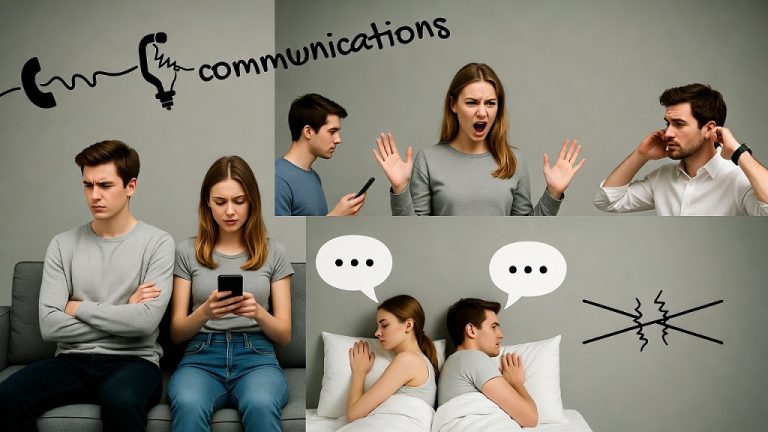
They open their phone and start scrolling—news, social media, the endless feed. You sit across from them and feel a familiar pinch. Not anger. Not disappointment. Just a quiet recognition that you’re occupying the same space in completely different ways. You want to talk about something real—something you read this week, something you’ve been thinking about. They want to rest their brain.
Neither of you is wrong. But something in you wonders: Are we built from the same material?
What Values Actually Are
Values are not opinions. They’re not what you think about politics or which city you want to live in. Values are the underlying principles that govern how you move through the world. They are the answers to questions you rarely ask yourself directly:
-
What does a “life well-lived” look like to me?
-
What do I consider non-negotiable in how I treat others?
-
What kind of discomfort am I willing to tolerate for something I believe in?
-
What does integrity mean in my daily choices?
You can’t see values. You can only see their expression. In how someone spends their time. In what they get angry about. In what they defend when they feel attacked.
The Hierarchy of Values
Every person operates with a hierarchy of values, even if they’ve never named it. Some values sit at the top—they are the ones you will fight for, sacrifice for, organize your life around. Others sit lower—nice to have, but not essential.
The problem in relationships isn’t usually that values are different. It’s that the hierarchy is mismatched.
Take honesty. Almost everyone says they value honesty. But for some people, honesty means never telling a lie. For others, honesty means not cheating, but small omissions are fine. For some, honesty is the top value—above comfort, above social harmony, above protecting someone’s feelings. For others, honesty is important, but not as important as keeping the peace.
When two people have the same words but different hierarchies, they end up in fights that feel confusing. They’re both saying “I value honesty,” but they’re speaking different languages.
The Three Values That Predict Longevity
Research on long-term relationships points to three core values that, when aligned, create a foundation that can weather almost anything.
Value One: Integrity
This is not about morality in a religious sense. It’s about the match between what someone says and what someone does. A person with high integrity values congruence. They mean what they say, and they say what they mean. When they make a promise, they keep it—not because they’re perfect, but because breaking a promise feels like breaking themselves.
When two people share this value, trust becomes automatic. There’s no need to monitor, to check, to verify. You know that their word is their bond.
When one person has high integrity and the other has a more flexible relationship with truth, the person with integrity slowly goes insane. They start tracking inconsistencies. They start feeling like the detective in their own home. The relationship becomes a place of constant, low-grade vigilance.
Value Two: Kindness
Kindness sounds soft. It’s not. Kindness in a values context is the commitment to treating each other well, even when you’re angry, even when you’re tired, even when you’re disappointed.
A kind person doesn’t use your vulnerabilities as weapons. They don’t aim for the soft spots when they’re hurt. They may get angry, but they don’t get cruel.
When both people value kindness, conflict stays contained. You can fight about the issue without fighting about the relationship. When kindness isn’t a shared value, fights become existential. Every disagreement threatens to dismantle the entire connection.
Value Three: Growth
This is the belief that people can change, that learning matters, that becoming a better version of yourself is a worthy pursuit.
A person who values growth reads books, asks questions, goes to therapy, apologizes and means it. They’re not satisfied with “this is just who I am” as an explanation for hurtful behavior.
When both people value growth, the relationship becomes a developmental space. You help each other evolve. When one person values growth and the other values stasis, the growing person eventually feels held back, and the static person eventually feels judged.
The Cognitive Bias That Blinds You
The bias here is projection. You assume that because you share certain surface-level interests—you both like hiking, you both want kids, you both vote the same way—that you share deeper values.
But interests are costumes. Values are bones. Two people can want kids for completely different reasons. One might want a family because they value connection and legacy. The other might want a family because they’re afraid of being alone in old age. Those are different values wearing the same outfit.
The Accountability Question
This part asks something uncomfortable. Not about them—about you.
Have you been hiding your own values to keep the peace?
Maybe you’ve stopped bringing up things that matter to you because it creates tension. Maybe you’ve learned to stay quiet when they dismiss something you care about. Maybe you’ve convinced yourself that your values are “extra” or “too much” or “not realistic.”
If you’re dimming your own light to avoid conflict, you’re not protecting the relationship. You’re slowly disappearing from it. And a relationship with only one person in it isn’t a relationship—it’s a hostage situation.
The Litmus Test
You want to know if your values are aligned enough to build a life. Here’s the question that will tell you:
When you think about the most important decision you’ll make in the next five years—career, location, family, health—do you trust that they will see the situation through a lens that makes sense to you?
Not that they’ll agree. Agreement is easy. Alignment is deeper. It’s about whether their reasoning, their priorities, their underlying principles, feel recognizable to you. Whether you look at how they make choices and think, Yes, that’s how a person should move through the world.
If the answer is yes, you have something worth protecting.
If the answer is no, you have something worth examining.
A Closing Thought
Values are not conversation topics. They’re not things you discuss once and check off a list. They are revealed in thousands of small moments—in what you laugh at, in what you get angry about, in what you defend when no one is watching.
A relationship built on aligned values doesn’t mean you never fight. It means that when you fight, you’re fighting about the same thing. You’re speaking the same language. You’re pulling in the same direction, even when the rope is taut.
And that, more than chemistry, more than shared interests, more than any other factor, is what makes a relationship last.