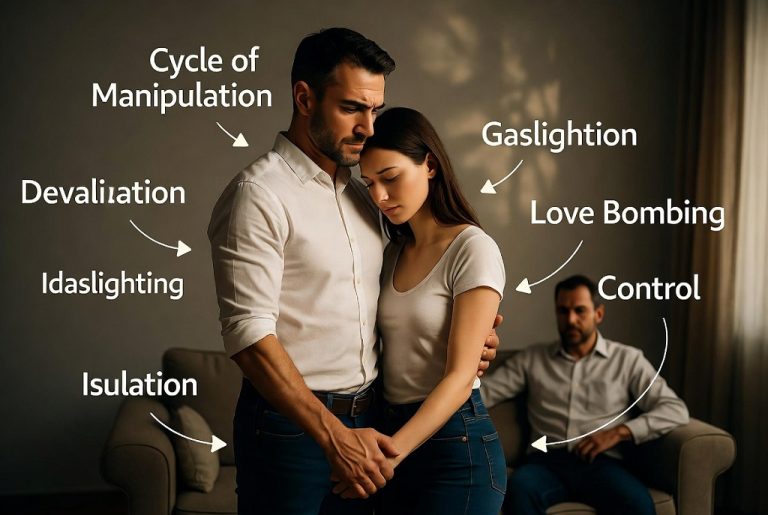

They’ve come to you. They’ve said the words. “I’m sorry. I was wrong. I shouldn’t have done that.”
It’s what you wanted to hear. It’s what you’ve been waiting for. And yet, as you stand there receiving it, something feels incomplete. The words are right, but the space around them feels hollow. You nod. You accept. But later, alone, you realize you don’t feel any different. The apology landed, but it didn’t land in you. It just landed in the room.
This is the gap between a real apology and a performed one. The words can be identical. The difference is in what the words are carrying.
The Weight of Words
An apology is not a sentence. It’s a container. What matters is what’s inside that container. Some apologies carry understanding, accountability, and a commitment to change. Others carry nothing but the hope that the words will be enough to end the conversation.
You’ve probably experienced both. You know the relief of a real apology—the way it actually shifts something in your body. You also know the emptiness of a hollow one—the way it leaves you still carrying the hurt, now with the added weight of having to pretend you don’t.
The Anatomy of an Apology That Changes Things
A real apology is not about the apologizer’s remorse. It’s about the wounded person’s healing. The orientation is outward, not inward. When you’re listening to an apology, you can look for these markers.
They Name the Specific Harm
“I’m sorry for what happened” is not an apology. It’s an abstraction. A real apology names the action: “I’m sorry I dismissed your concerns about the trip. I’m sorry I made you feel like your opinion didn’t matter.”
This specificity matters because it shows they’ve done the work. They’ve thought about what they did. They’re not apologizing to a general idea of you; they’re apologizing to the actual you who was hurt in a specific way.
They Acknowledge the Impact, Not Just the Intent
“I didn’t mean to hurt you” is not an apology. It’s a defense. A real apology centers your experience: “I can see that my words hurt you. I understand why you felt that way. Even though I didn’t intend harm, I caused it, and I’m sorry.”
This is the hardest part for many people. It requires them to sit with the fact that they caused pain, even if it wasn’t their goal. It requires them to tolerate their own imperfection.
They Don’t Demand Forgiveness
A real apology is offered freely, with no strings attached. It doesn’t come with a timeline. It doesn’t come with a “So, are we okay now?” It understands that forgiveness is not something you owe in exchange for words. It’s something you may or may not come to, in your own time.
They Surface the Cost
A person who truly understands what they’ve done will often name the natural consequence. “I broke your trust, and I know that will take time to rebuild. I understand if you need space.” This is not self-flagellation. It’s reality. They’re acknowledging that their apology doesn’t erase what happened.
They Change
This is the only proof that matters. After the apology, the behavior stops. Not immediately and perfectly—change is a process—but consistently. You don’t have to keep having the same conversation. The apology was a bridge to a different way of being, not a toll you paid to stay on the same road.
The Language of Hollow Apologies
Hollow apologies often sound similar to real ones. The difference is in what they’re trying to accomplish.
The Goal Is Extraction
A hollow apology is designed to extract you from your anger, extract you from your distance, extract forgiveness. It’s a tool for restoring the status quo. The apologizer’s comfort is the priority. Your healing is secondary.
The Language Is Vague
“I’m sorry for whatever I did.” This is the apology of someone who doesn’t want to look too closely at their actions. It puts the burden back on you. If you accept it, they’re off the hook. If you try to clarify, you’re “dwelling.”
The Focus Is on Their Suffering
“I feel so terrible. I can’t believe I did that. I hate myself.” This apology requires you to become the comforter. You end up saying, “It’s okay, don’t be so hard on yourself,” before you’ve even decided if it is okay. Their pain becomes the center of the conversation, and yours is pushed to the side.
It Comes With Conditions
“I said I’m sorry. What more do you want from me?” This reveals the transaction. They’ve paid the apology tax, and now you owe them normalcy. If you’re still hurt, you’re the problem.
The Silence After the Words
After an apology, there’s always a silence. It might be a moment. It might be a day. In that silence, something happens—or doesn’t.
Watch the silence.
Does the person return to the issue later, checking in? “I’ve been thinking more about what I did. I want to make sure I understand.” This shows integration. They’re still holding the weight of what happened.
Or does the silence feel like a closing of the file? The conversation is over, and they act as if nothing occurred. The issue is not just resolved; it’s erased. This suggests the apology was never about repair. It was about closure—for them.
The Question You Carry
When you’ve received an apology and you’re not sure if it was real, there’s one question that can guide you:
Did this apology give me more room to breathe, or did it just take up space?
A real apology creates expansion. You feel lighter. You feel like something was actually addressed. The relationship feels slightly more solid.
A hollow apology just occupies the moment. It fills the silence, but it doesn’t change anything. After it’s over, you’re still holding the same weight, now with the added burden of having pretended to be satisfied.
You don’t have to decide immediately. You can sit with the apology. You can watch what happens next. Time reveals what words conceal. And in time, you’ll know whether you received a bridge or just a sound.
If This Is You, Your Next Small Step Is
The next time you receive an apology, try this: don’t respond immediately. Just say, “Thank you for saying that. I need some time to process.”
Then, over the next week, watch. Watch their behavior. Watch whether the issue recurs. Watch whether they check in with you or act like nothing happened.
Your feelings after a week are more reliable than your feelings in the moment. The moment is full of relief and hope. The week is full of data.
What You Deserve to Say
You are allowed to receive an apology and say, “I appreciate the words, but I need to see change before I can feel safe again.” You are allowed to hold the line. You are allowed to say, “That apology didn’t land for me, because it felt like it was more about you than about what you did.”
If the relationship can hold that response—if they can pause and say, “Okay, help me understand what you need”—you have something to build on.
If they can’t, you have your answer. The apology wasn’t for you. It was for them.
Related Explorations:
-
The Anatomy of a Sincere Apology vs a Manipulative One
-
Why Some People Never Take Accountability
-
Blame Shifting: The Subtle Strategy That Destroys Trust