
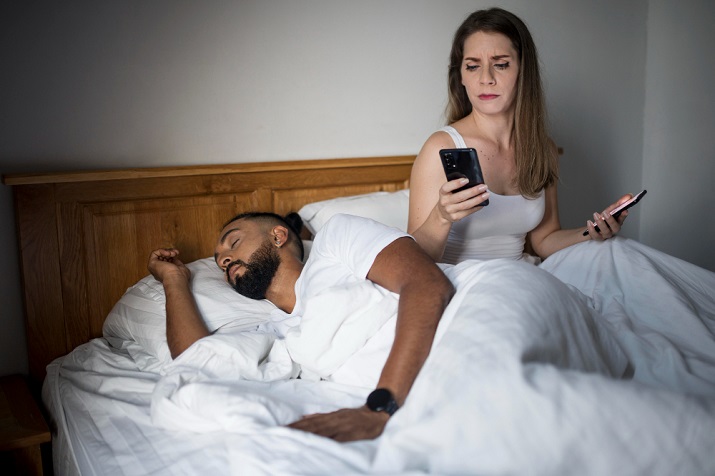
The moment you found out, the world fractured. The life you knew, the future you saw, the person you trusted most—all of it shattered in an instant. Now, there is only the noise: the frantic, looping thoughts, the pit in your stomach that won’t close, the feeling of being completely unmoored. You google in a haze, typing “my husband cheated what do I do first” because the weight of the “forever” questions is too much. You just need to know what to do in the next five minutes.
If this is where you are right now—if the ground has vanished beneath your feet—you are not alone. And I need you to hear this, above the noise: you do not have to decide anything about your entire future today. Your only job for the next 24 hours is survival. Not healing, not fixing, not deciding. Just getting through this hour, and then the next, with as much of yourself intact as possible.
This article is not another list of generic advice. It is a containment protocol. We will not talk about forgiveness or the future of your marriage here. We will talk about building a temporary emotional dam against the flood so you can breathe, think, and eventually, make choices from a place of strength, not sheer panic. This is your first step in answering the real question beneath “what to do after finding out about affair”: how do I stop drowning long enough to see the shore?
My Husband Cheated What Do I Do First? The 72-Hour Containment Protocol
When the mind is in acute trauma, it cannot process “fix your marriage.” It can only follow clear, direct commands. Think of yourself as the commander in an emergency room. The crisis is active; your task is triage.
Hour 0-12: The Immediate “Do Not” List (Your Emergency Brake)
Your brain is flooded with stress hormones. In this state, the impulse to act—to confront, to gather evidence, to call everyone you know—is overwhelming, but those actions often cause more damage. Your first task is to create a holding pattern.
In the first 12 hours, your rule is simple: Do not engage with the source of the injury while you are actively bleeding.
-
Do NOT confront him yet if you are shaking, sobbing, or screaming. A confrontation from this place rarely yields truth—it often yields more lies or deflection, which will compound your pain.
-
Do NOT contact the other person. It feels like a source of answers, but it is a minefield that will almost certainly leave you more humiliated and enraged.
-
Do NOT make any permanent decisions about divorce, leaving, or ending things. The “I can’t think after discovering infidelity” feeling is real and biological. Your prefrontal cortex—the logical decision-maker—is offline. Do not let your trauma make lifelong choices.
-
Do NOT broadcast it on social media or tell all your friends and family. Once it’s out, you cannot control the narrative. You need a small, trusted circle first.
What to DO instead:
-
Secure your physical space. If you feel unsafe or simply cannot bear to be near him, go to a trusted friend’s house, a family member’s, or even a hotel for the night. Your nervous system needs a place where it is not on high alert.
-
Designate one human anchor. Text or call the one most steady, non-dramatic person you know. Use this script: “I’m having a severe personal crisis. I don’t need advice right now. I just need you to know, and maybe to be on standby to talk or sit with me.” You are not burdening them; you are deploying your first responder.
-
Hydrate and take a shower. I am serious. Your body is in shock. Warm water can regulate your nervous system. Drinking water helps process stress hormones. This is not trivial self-care; this is biological first aid.
The First Real Control You’ll Get Back: Information Management
One of the most torturous parts of early infidelity anxiety is the obsessive mind-loop: “I need to know everything. When? How? Why? Where?” Your mind is desperately trying to solve the puzzle to regain a sense of safety. But trying to get the full story from a deceptive partner in your current state is like trying to solve a Rubik’s cube while blindfolded on a rollercoaster.
Your New Rule: You are the project manager of this investigation, not a passive recipient of information (or lies).
-
Grab a notebook or open a notes app. Label it “Burning Questions.” Every time a “I need to know…” thought hijacks your brain, write it down. This gets it out of your chaotic mental loop and into a controlled space. The list is safe. It will be there later.
-
Set a boundary with yourself: “I will not seek answers for the next 24 hours.” This is the single hardest but most powerful thing you can do. It breaks the cycle of demand-panic-more lies-more pain.
-
Understand this: A person capable of sustained deception will not suddenly become transparent because you’re in pain. Truth comes through structured accountability, not emotional begging. By pausing, you stop feeding the chaotic system and start changing the power dynamic.
Am I Overreacting After Being Cheated On? How to Ground Your Sanity
In the quiet moments between the panic attacks, the doubt creeps in. “Was it my fault?” “Am I blowing this out of proportion?” “Maybe it was just a mistake…” This is especially potent if your partner has ever minimized your feelings or made you feel “dramatic.”
Let’s be unequivocally clear: Discovering your partner’s infidelity is a profound emotional and psychological trauma. Your reaction—the anxiety, the grief, the rage, the inability to function normally—is a NORMAL response to an ABNORMAL, devastating event.
You are not crazy. You are not overreacting. Your system is responding appropriately to a massive breach of trust and safety. The feeling of “I can’t think after discovering infidelity” is a recognized symptom of trauma, often called “brain fog” or cognitive dissociation. Your mind is protecting you by going offline.
A Grounding Exercise for Right Now:
-
Place your feet flat on the floor.
-
Name 5 things you can see in the room. (e.g., the blue curtain, a book spine, a speck on the wall)
-
Name 4 things you can feel. (e.g., the cotton of your shirt, the cool air on your skin, the floor beneath your feet)
-
Name 3 things you can hear. (e.g., the hum of the fridge, a distant car, your own breath)
-
Take two slow breaths.
This isn’t to make the pain go away. It’s to briefly anchor you in your body and the present moment, away from the catastrophic future your mind is projecting. Do this as often as you need to.
When You’re Ready to Talk: From Chaos to Controlled Dialogue
After the initial shock settles (this could be a day or three), you may need to interact. Doing this without a plan is like walking into a negotiation without knowing what you want. You will get derailed.
Before any conversation, decide on ONE simple, logistical goal. It is NOT “get the whole truth.” It is NOT “make him feel as bad as I do.”
Examples of a first-conversation goal:
-
“To state that I know, and that all further discussions will require full honesty.”
-
“To arrange for one of us to sleep elsewhere for the next few nights.”
-
“To ask him to write down a basic timeline of events, to be given to me in 24 hours.”
You communicate the goal, and you do not engage in debates, justifications, or deflection. If he says, “It didn’t mean anything,” you do not argue. You say, “That is not relevant to my request for a timeline.” This is how you start to build the new, accountable dynamic you will need, whether you stay or go.
What Real Accountability Actually Looks Like (And How to Spot Its Opposite)
As you move forward, you will be bombarded with words. “I’m sorry.” “It was a mistake.” “You’re my world.” In the wake of betrayal, words are cheap. Your anxiety will spike because you don’t know what to believe. You’re terrified of being fooled again.
Real accountability has a specific, actionable fingerprint. It is not about emotion; it is about behavior. Here is the difference:
| Deflection & False Reconciliation | Genuine Accountability |
|---|---|
| “I’m sorry you feel hurt.” (Makes your feeling the problem) | “I am sorry I betrayed you and broke your trust. My actions caused this pain.” (Takes ownership) |
| “It was just sex/a one-time thing.” (Minimizes) | Provides a full, voluntary disclosure of events without being forced to every graphic detail. |
| “Can’t we just put this behind us?” (Rugsweeping) | “I understand this will take a long time. I am willing to answer your questions and do whatever is needed, for as long as it takes.” |
| Gets angry when you’re sad, accusing you of “dwelling.” (Punishes the victim) | Gives you space for your grief without defensiveness, and is transparent to rebuild safety. |
| The behavior that led to the affair (secrecy, disrespect) continues. | Actions and patterns demonstrably change. Phone is open, commitments are kept, therapy is attended. |
Why This Matters Now: Being able to spot the difference is your shield against false reconciliation—where you “take him back” only to be betrayed again because the root issues were never addressed. This discernment is what slowly drains the 24/7 anxiety, because you are no longer guessing; you are observing and measuring behavior against a clear standard.
How Our “Apology Authenticity Evaluator” Can Serve as Your Second Opinion
When you’re deep in the emotional trenches, hearing an apology can be incredibly confusing. Part of you desperately wants to believe it, while another part is screaming that it’s a trap. This internal conflict is the source of immense anxiety.
This is why we built a tool like the Apology Authenticity Evaluator. Let me be explicitly clear about what it is and is not:
-
It IS: A trained, objective pattern-recognition tool. It uses forensic linguistics and psychology benchmarks to analyze the structure of an apology—its language, ownership, specificity, and absence of manipulative red flags.
-
It IS NOT: A replacement for your gut, your therapist, or your own judgment. It cannot feel the nuance of your relationship’s history. It does not know the look in his eye when he said it.
Its purpose is to act as a dispassionate second set of eyes. When your own vision is blurred by hope and fear, it can help you see what you might miss: the hidden “but,” the subtle blame-shift, the minimizing word. It doesn’t tell you what to do. It gives you one more data point—a rigorously analyzed one—so you can make your own informed choice.
Example of What It Might Analyze:
-
Apology Input: “I’m sorry if what I did made you feel insecure. I never meant to hurt you, and I wish you wouldn’t go through my phone. We should just focus on moving forward.”
-
Tool Output (Simplified):
-
Accountability Score: Low. Uses “if” and focuses on your “feeling,” not his action.
-
Deflection Detection: High. Contains victim-blaming (“go through my phone”) and rug-sweeping (“move forward”).
-
Verdict: Manipulative Deflection. Lacks core components of a true apology. Recommends seeking a specific, behavior-focused apology and observing consistent action change.
-
The tool doesn’t solve trauma. It creates a moment of clarity within it. It helps you move from “Does he mean it?” to “According to established psychological frameworks, this apology lacks the structure of true accountability.” That shift is a powerful step out of anxious doubt.
Your 24-Hour Anxiety Containment Checklist
For when the thoughts are spinning too fast to read:
-
Pause. Say out loud: “I do not have to decide anything today.”
-
Secure Space. Are you physically safe/okay? If not, go to a safe place.
-
Designate Your Anchor. Contact one calm person. Use the script.
-
Hydrate. Drink a full glass of water.
-
Ground Yourself. Use the 5-4-3-2-1 exercise.
-
Capture Questions. Write down every “I need to know…” in a notebook.
-
Set a Self-Boundary: No seeking answers/information for 24 hours.
-
Rest. Do not underestimate the power of 20 minutes of quiet, or sleep if possible.
A Final Word on This Phase
Containing 24/7 anxiety is not about making the pain disappear. It is about building a temporary structure around it so it doesn’t consume your entire being. It is about moving from passive suffering to active, albeit small, management of your crisis.
Why Marriage Fortress Exists: I created this space because I learned, through my own journey and supporting others, that the gap between “devastated” and “healing” is filled not with platitudes, but with protocols. When your world is broken, you don’t need poetry; you need a blueprint. Every tool, every article here is designed to be a practical, actionable piece of that blueprint, giving you back a sense of agency when you feel you have none.
You are in the worst part. But you are not broken. You are responding to a break. And responding means you are still here, still fighting for your own peace. That is everything.
FAQ: Containing Infidelity Anxiety
Q: Is it normal to feel physically sick and unable to eat or sleep?
A: Absolutely. Infidelity trauma triggers a massive stress response in the body. Insomnia, nausea, heart palpitations, and a complete loss of appetite are very common. Treat your body gently as if you’re recovering from the flu. Try smoothies, broth, and prioritize rest even if you can’t sleep.
Q: I keep cycling between rage and despair. Am I going crazy?
A: No. This is a classic trauma response. Your nervous system is oscillating between the “fight” (rage) and “collapse” (despair) survival states. It is exhausting, but it is not insanity. The grounding exercises and containment protocols are specifically designed to help regulate this cycle.
Q: He’s being really nice now and saying all the right things. Why does that make me even more anxious?
A: Because your intuition recognizes the dissonance. The person who caused severe injury is now acting like the caregiver. This is often called “love-bombing” and can be a form of manipulation to avoid real consequences. Your anxiety is a wise signal to watch for consistent, sustained action over time, not just comforting words in the immediate aftermath.
Q: When should I consider therapy or professional help?
A: Immediately, if you have thoughts of harming yourself or others. Soon, for everyone else. A therapist specializing in trauma or infidelity can be a crucial guide. Think of them as the structural engineer for your mind while you do the emergency containment we’ve outlined here.
Q: What’s the single most important thing I can do in the first week?
A: Be fiercely protective of your own nervous system. Every decision, from what information you consume to who you talk to, should be filtered through this question: “Will this calm my system, or dysregulate it further?” Your clarity and future decisions depend on your inner stability. Protect it above all else.
Your Next Step: A Moment of Quiet in the Storm
If the thought of reading another article or making a big decision is too much, I invite you to take one small, gentle step. Let us send you a simple, printable version of the 24-Hour Containment Checklist you saw above, along with a guide to the “First 7 Days” protocol. It’s a calm, step-by-step map for the immediate days ahead, delivered to your inbox.
No pressure. No sales pitch. Just a practical tool for the moment you’re in. You can use it, or simply leave it there until you’re ready.
👉 Get the Quiet Checklist & First-7-Days Protocol
Take one breath. Then take the next. We are here.